Funding scales the geometry. It cannot rush the trust.
Funding can help more classrooms participate. The culture of students lifting each other up took decades to build, and it was already there waiting. The full story is one page over.
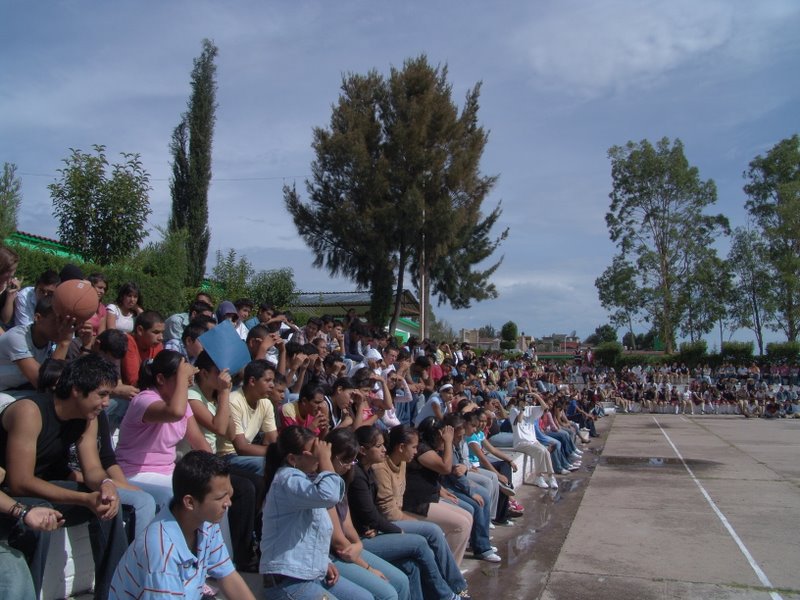
That first trip grew into moments like this: a Durango school gathering to welcome the YTC contingent and a new computer lab. Year by year, the relationship became a learning network where students become the teachers.
Welcoming visiting students into family homes has been at the heart of this exchange since 2003. Mexican families opened their homes first in Durango. When the bridge began carrying students north, families in Cicero continued the tradition.
Hosting turns an international visit into something personal: shared meals, ordinary family life, and relationships that remain long after the trip ends.
Read the full Bridge to Cicero storyAn audio-enhanced edition—with narration, archival trip photography, and guided highlights—is now in development.
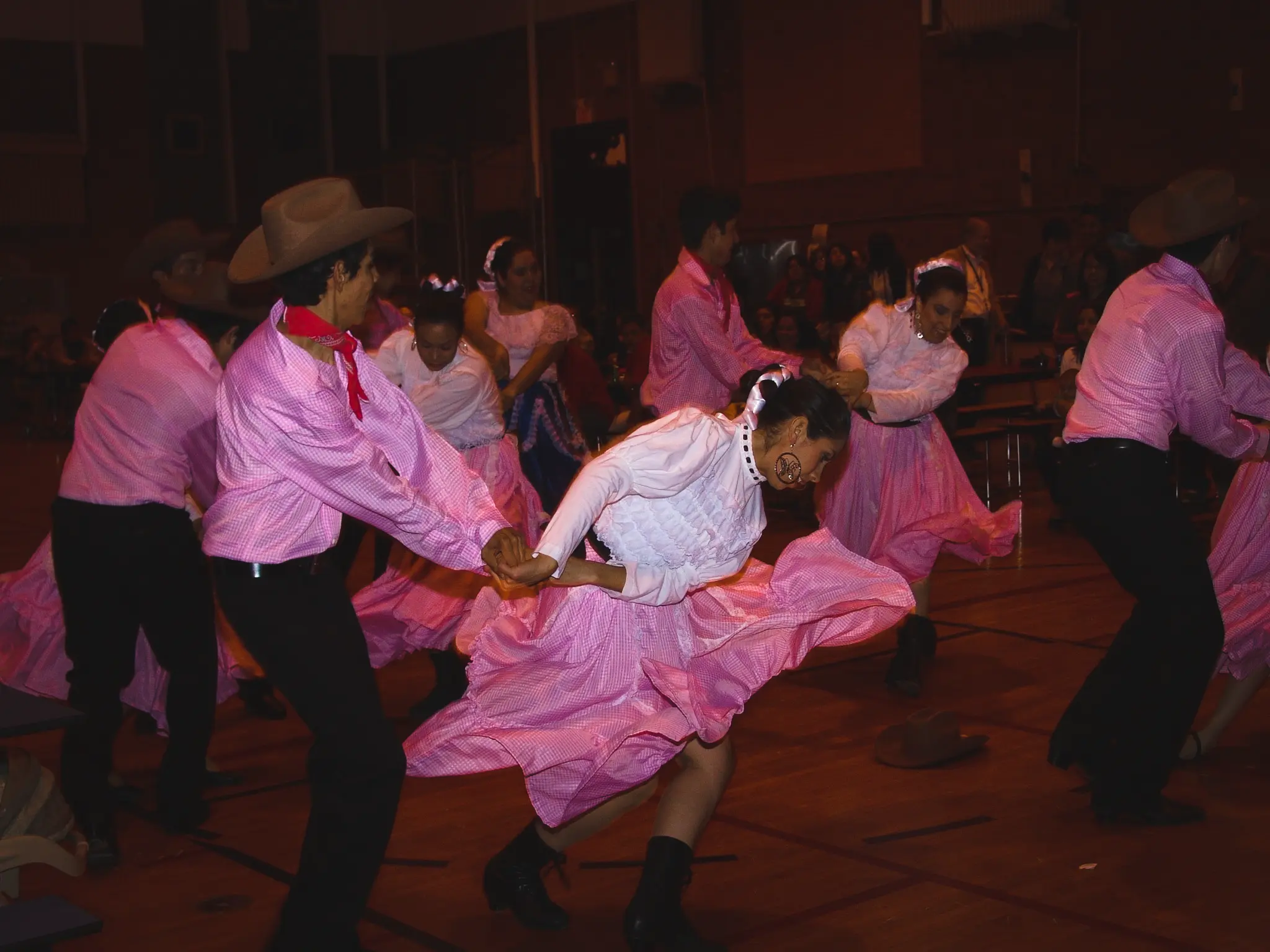
On the ground, something deeper was taking shape.
Students carried refurbished computers into mountain communities. Mexican educators and institutions kept the work moving locally. Families built friendships that lasted beyond each trip. Year by year, the exchange created the trust, relationships, and shared experience that made a learning network possible.
The grant did not create the relationship. It gave an established network the equipment, coordination, and teaching capacity to show what it could become.
In those 18 months, YTC expanded from two programs to nine and from one state to four Mexican states. YTC programming was introduced to a population of 2,000 students, with 243 students directly enrolled. The project also delivered 50 computers, 125 Arduino kits, projectors, webcams, and speakers. More importantly, weekly peer-to-peer instruction—supported by local facilitators—helped create an international network of student-teachers.
Seven of eight continuing sites improved their average evaluation scores, and attendance increased at seven. Female participation rose from 37% to 52%. A baseline survey of 200 students showed both the need and the opportunity: 57% had never taken a robotics or programming class, 45% hoped to become engineers, and 88% wanted to teach other children what they learned.
The Wins
How the Present Was Built
The expansion was fast. The foundation wasn't. It started in 1998 as a club refurbishing donated computers in a Cicero basement. In 2000, the first service trip to Durango. By 2001, refurbished computers were running in thirteen sites, including rural medical clinics. In 2003, the first institutional partnership — COBAED. In 2004 the exchange reversed, and Durango's scholars started coming to Chicago. Across two decades, an estimated 1,100 students and educators have participated in two-way travel.
A recent public diplomacy grant from the U.S. Department of State, through the U.S. Embassy in Mexico City, helped YTC add robotics equipment, technical English, and bilingual coordination. It was a new chapter made possible by relationships that were already trusted.
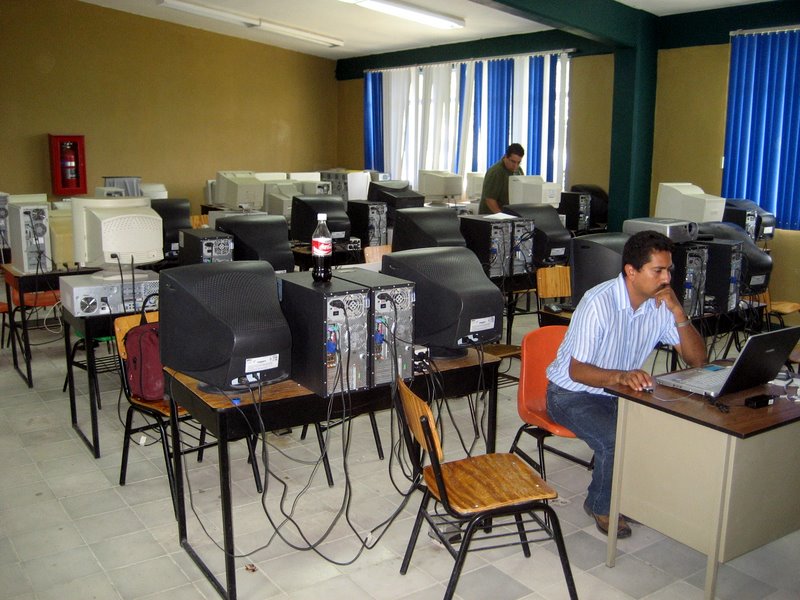
Mezquital, Plantel 17 — a lab the mission era built. The tournament team, the fire-detection build, and the translators all came from this municipality, a generation later.
Funding scales the geometry. It cannot rush the trust.
Funding can help more classrooms participate. The culture of students lifting each other up took decades to build, and it was already there waiting. The full story is one page over.
The expansion is organized around partners that have already defined what they will contribute: classrooms, local educators, student recruitment, equipment stewardship, bilingual mentors, engineering expertise, and continued programming after the grant ends.
Together, they are ready to strengthen nine existing programs and launch twelve more—creating 21 locally rooted learning centers across nine Mexican states. Like YTC at ETHS and Morton East, each center is designed to develop student-teachers who sustain the work, support the students who follow them, and help the network reach its next community.
The club network is both a host and a long-term pathway for expansion. The proposal strengthens programs in Estado de México and San Luis Potosí and opens new access through clubs in Baja California, Baja California Sur, Sonora, and Hidalgo.
Each club supplies space, a local educator, student recruitment, supervision, equipment care, and program records—and commits to a locally led cohort after the grant. Once facilitators and student-teachers are established, the same curriculum, training, and equipment model can move from club to club over time, allowing YTC to grow through a national community network instead of rebuilding from scratch in every city.
Durango's public-school partners connect YTC to students in municipal and rural communities where the relationship first began. They contribute classrooms, educators, recruitment, scheduling, supervision, equipment stewardship, attendance records, and day-to-day program leadership.
Students first complete the full robotics sequence, then selected youth instructors train and practice in pairs before teaching introductory courses themselves. The schools provide the stable local structure that lets each new generation teach the next.
This university anchor already shows what locally owned growth can produce: competitive robotics teams, community engineering projects, student leadership, and curriculum translated into Audam, O'dam, and Huichol.
Faculty and university students can support advanced technical work, mentor younger learners, and connect classroom lessons to local challenges. Under the expansion, every site develops a community engineering project—not simply a robot demonstration, but technology designed around a need students recognize in their own community.
The continuing Aguascalientes program brings another established school into the wider system. The school provides a local educator, recruits students, protects the equipment, maintains program records, and supports instruction throughout the curriculum.
Its commitment to continue a locally led cohort after the award is essential: the equipment remains useful, trained students become instructors, and the site grows as a permanent learning center rather than ending when outside funding does.
Georgia Tech Student Makers bring the technical depth and multidisciplinary curriculum-design ability of one of America's leading engineering institutions. Ten students have already entered YTC's instructor-preparation pipeline, with the capacity to strengthen lessons in robotics, electronics, programming, fabrication, engineering design, and emerging technologies.
They will help prepare mentors, lead recurring technical sessions, refine curriculum, and review the community engineering projects developed across Mexico. One Student Makers member is already organizing a YTC program in his home country of Colombia—evidence that the college-mentor pipeline can produce not only instructors, but young leaders capable of carrying the YTC model into another country.
Their role expands what Mexican facilitators and student-teachers can attempt without replacing local leadership. Georgia Tech contributes advanced knowledge; each Mexico site keeps the relationships, teaching responsibility, and capacity to train the next generation.
YTC's two flagship high-school programs provide experienced near-peer instructors, bilingual support, project feedback, and cross-border exchange under adult supervision. Their students understand both sides of the model: learning a technical skill and then accepting responsibility for someone else's learning.
Morton and ETHS are proof that a YTC center can renew itself. Students arrive as beginners, become mentors, train those who follow, and eventually help another program begin—the same cycle the Mexico network is designed to reproduce.
Beyond the partners named in the submitted proposal, YTC is developing complementary capacity for instructor recruitment, curriculum, training, refurbishment, and technical support.
A developing bilingual educator pipeline can recruit early-career STEM professionals across Latin America and prepare them to teach YTC's robotics curriculum. YTC supplies the curriculum, materials, training, and quality support; Dream2Teach can organize the recruitment and coordination of volunteer educators.
Over time, that pipeline can give a 21-site network dependable instructional support while more Mexican facilitators and student-teachers are prepared to lead independently.
A developing technical partnership can assist with curriculum refinement and instructor training while adding TechServ's experience in computer refurbishment, technical-service systems, and student-led technology support.
That combination reconnects YTC's original refurbishment work with its modern robotics curriculum: young people do not only use technology; they learn how to maintain it, repair it, teach it, and keep a community learning center operating.
YTC is seeking support to equip and launch the next Mexico sites, train local facilitators and student-teachers, and make Andrea Isita's leadership of YTC Mexico full-time. Andrea holds the relationships, data, schedules, schools, and people together. A growing national network needs that work to become a full-time role.